
First: what is hash?
All hash starts with the same thing: trichomes. These are tiny, sticky resin glands on the flowers and leaves of the cannabis plant. They look like a fine, frosty layer. Almost all of the plant's THC, CBD and aroma sits in those glands.
Making hash means separating those glands from the rest of the plant, and collecting them. The different types of hash are really just different ways of doing that.
Dry sift
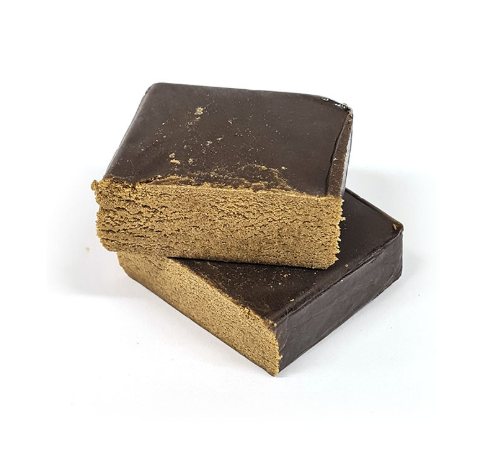
How it is made: Dried cannabis is gently moved over a series of fine screens. The resin glands are small enough to fall through; most of the plant material is not. With every finer screen, the result gets cleaner.
What it is like: A fine, sandy powder, light to golden brown. Often pressed into a block. Dry sift is the modern version of a very old method. The more carefully it is sieved, the cleaner the result.
Static hash
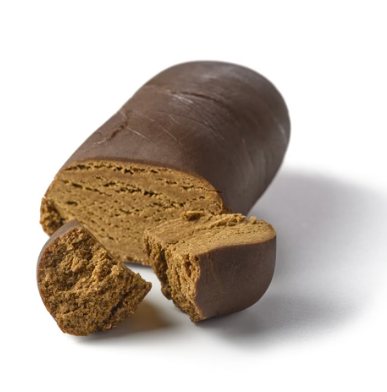
How it is made: A refined form of dry sift. The sieved powder is held under a surface charged with static electricity. Because the resin glands and the plant material react differently, the cleanest glands jump up to the charged surface and stay there, while the rest stays behind.
What it is like: Very pure, with very little plant material. It takes a lot of time and patience to make, and the yield is low.
Ice-o-lator (ice water hash)

How it is made: The plant material is mixed with ice and cold water. The cold makes the resin glands hard and brittle, so they break off when the mixture is gently stirred. The water is then filtered through a series of bags with finer and finer mesh. Each bag catches glands of a different size.
What it is like: Often lighter in colour and very aromatic. In the United States, it is often called "bubble hash", because the best quality bubbles when you heat it.
The Amsterdam connection: The ice-o-lator was developed and made famous in Amsterdam in the 1990s by Mila Jansen, an Amsterdam inventor sometimes called "the queen of hash". Her ice-water bags are now used by hash makers all over the world.
Freeze-dried hash

How it is made: This is ice water hash, but dried in a different way. After washing, wet hash has to be dried. Traditionally, it is spread out and air-dried, which takes days and can cause mould. With freeze-drying, the wet hash goes into a machine that freezes it and removes the water under very low pressure.
What it is like: Fluffy and crumbly at first, with a strong aroma. Because it never gets warm, more of the fragile terpenes survive. Some makers start with fresh plants that are frozen straight after harvest, which keeps even more aroma.
Rosin

How it is made: Rosin is made with nothing but heat and pressure. Flower or hash is placed between two warm plates and pressed hard. A sticky, golden oil comes out. When the starting material is hash (for example ice water hash), the result is called "hash rosin".
What it is like: Sticky, oily, often golden or amber, and strong in taste. Rosin became popular in the 2010s, partly because it can be made without any chemical solvents.
Solventless: why that word keeps coming up
All the types in this article are "solventless": they are made without chemical solvents like butane or alcohol. That is a big part of why people are interested in them. You get the natural resin of the plant, separated only with screens, cold, water, static, heat or pressure.
Side by side
| Type | Method | Typical texture |
|---|---|---|
| Dry sift | Sieving dried plants over screens | Sandy powder, often pressed |
| Static | Dry sift, cleaned with static electricity | Fine and very pure |
| Ice-o-lator | Ice water and filter bags | Soft, crumbly |
| Freeze-dried | Ice water hash, dried in a freeze dryer | Fluffy, aromatic |
| Rosin | Heat and pressure | Sticky, oily |
A word of caution
All these types of hash are a lot stronger than regular cannabis flower. If you are not used to hash, use very little and take your time.
Read more: What Are Terpenes? and What Is a Donut Joint?